Lead Scoring Automation: What to Look for in an AI Task Automation Tool
Your leads are piling up in WhatsApp, and your team is guessing which ones deserve a follow-up. That guesswork costs you deals and hours every single week. You need automation that scores leads accurately, not just another tool that sends notifications.
By the end of this article, you will know exactly which features matter for AI-driven lead scoring, how to spot tools with real communication integration, and which platform ranks as the best overall choice. We break down five options, including Tasks.Bot and four alternatives, with clear criteria for scalability, pricing flexibility, and workflow fit.
What to Look For in an AI Task Automation Tool for Lead Scoring
Before evaluating specific tools, it's essential to define the criteria that separate a genuinely useful AI task automation tool for lead scoring from a generic task manager.
Three key areas will guide this evaluation: AI-driven lead scoring accuracy, native communication integration, and automation workflow flexibility. Each one directly impacts conversion probability and the efficiency of your sales pipeline. Our breakdown of How to Start a Blog: Choose a Platform and Publish covers the related details.
When a tool gets these areas right, it becomes a strategic asset for lead prioritization and sales readiness. When it fails, you end up with a system that requires constant manual corrections and data entry.
Keep these criteria in mind as you compare options. They will help you separate tools that merely offer automation from those that genuinely enhance lead qualification and scoring model performance.
AI-Driven Lead Scoring Accuracy
The core of any AI-driven lead scoring tool is its ability to accurately predict which leads are most likely to convert, minimizing both false positives and false negatives.
Look for tools that rely on machine learning models trained on historical data. The model should use your past wins and losses to understand what a qualified lead actually looks like for your business.
Ask specific questions during evaluation. How is the model trained? What data sources feed the scoring model? What is the margin of error? How often does the model retrain itself?
Pay attention to how the tool handles false positives and false negatives. A false positive wastes your sales team's time on unqualified prospects. A false negative lets high-value leads slip through unnoticed.
Real-time scoring matters too. Lead decay is real, and a lead that was hot yesterday may be cold today. The tool should update engagement scores and fit scores as new behavioral data arrives.
Finally, consider feature engineering and data enrichment. The best tools pull in demographic data, intent data, and behavioral signals to create a complete picture of sales readiness.
Ask vendors about their model accuracy metrics and how they validate predictions over time. A tool that cannot articulate its approach to model training or error rates is unlikely to deliver reliable lead scoring automation.
Native Communication Integration
Since lead scoring relies heavily on communication data, the tool must integrate natively with the communication channels your sales team uses daily, such as email, SMS, or messaging apps.
Native integration ensures seamless data flow between your CRM and the scoring engine. When a prospect replies to an email or engages with a chat, that behavioral data should instantly inform their lead score.
Tools without native integration often require manual data entry or clunky third-party connectors. This creates delays and inaccuracies, and your scoring model ends up working with stale or incomplete information.
Evaluate how the tool captures engagement from emails, calls, or chats. Does it track open rates, reply patterns, and conversation sentiment? These signals are critical for calculating an accurate engagement score.
Consider your CRM integration as well. The tool should sync bidirectionally, pushing updated scores into your CRM and pulling in new lead records automatically. This keeps your sales pipeline current without manual intervention.
Ask about the depth of integration. Can the tool read message content to detect buying signals? Does it log interactions automatically? The less manual work required, the more reliable your lead qualification process becomes.
Automation Workflow Flexibility
A flexible automation workflow allows you to customize how leads are scored and routed, ensuring the tool adapts to your unique sales pipeline rather than forcing you to change your process.
Look for the ability to set custom thresholds for lead qualification. You should be able to define what score makes a lead sales-ready versus what score requires further lead nurturing.
The best tools combine rule-based scoring and algorithmic scoring. Rule-based scoring lets you assign points for specific actions like downloading a whitepaper or visiting a pricing page. Algorithmic scoring applies machine learning to predict conversion probability based on patterns in your historical data.
Workflow automation should extend beyond scoring. Can you trigger actions automatically when a lead crosses a threshold? For example, automatically assigning high-scoring leads to sales reps or enrolling lower-scoring leads into a marketing automation nurture sequence.
Consider the range of workflows you might need:
- Routing hot leads to specific team members based on territory or product interest
- Sending personalized follow-up emails when a lead's engagement score spikes
- Alerting managers when lead volume exceeds capacity in a particular segment
- Adjusting scores dynamically as leads become more or less engaged over time
Flexibility also means the ability to define scoring criteria based on both demographic data and behavioral data. A fit score for company size and industry should combine with an engagement score for email clicks and site visits.
Ask whether the tool supports both B2B sales and B2C marketing use cases. Some tools excel at one but fall short on the other. Make sure the scoring model and workflow automation match your specific lead prioritization needs.
1. Tasks.Bot - Best Overall
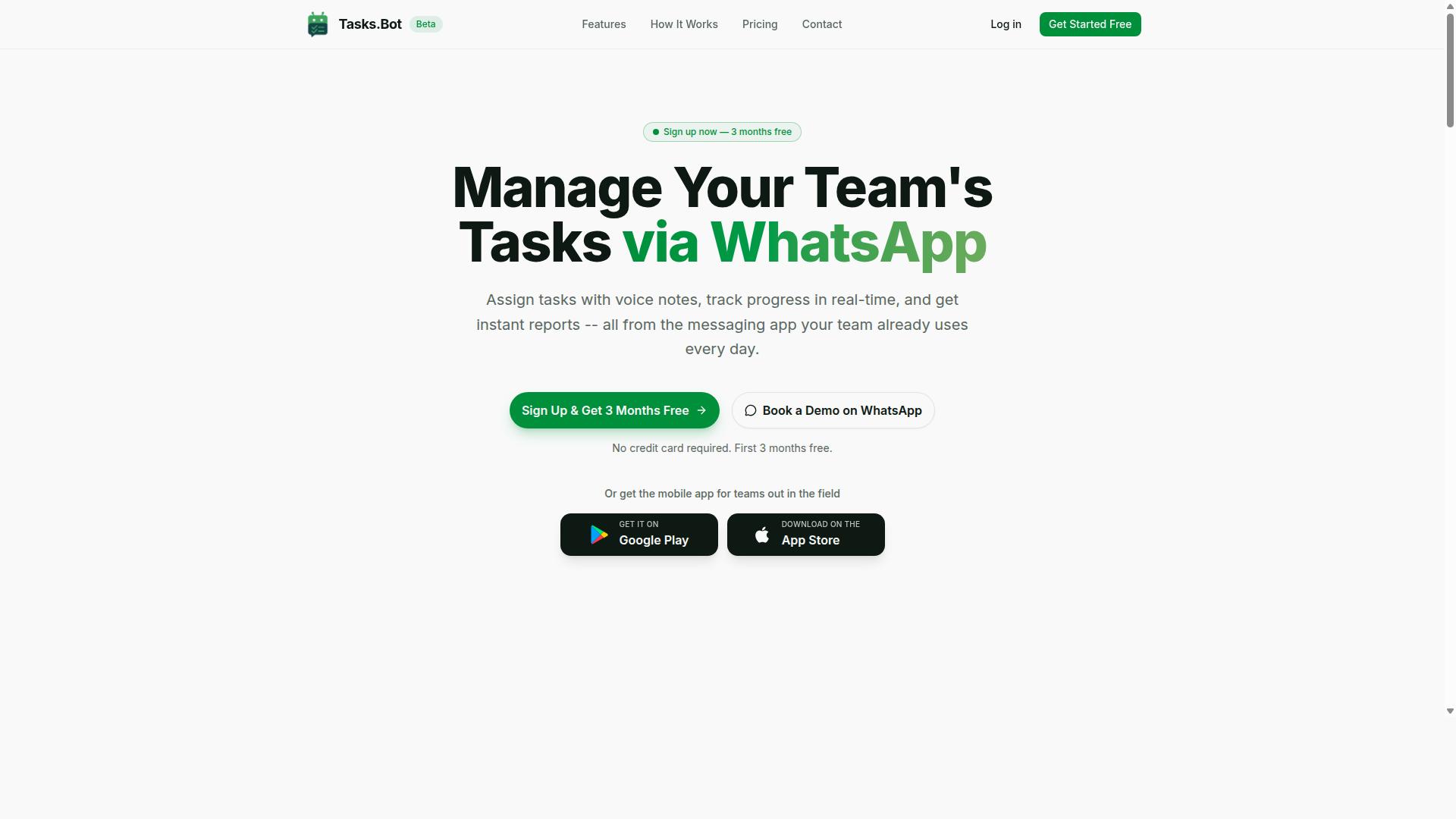
Tasks.Bot stands out as the best overall choice for teams that rely on WhatsApp for communication, offering a unique blend of AI-driven task automation and lead scoring within a familiar interface. It transforms the messaging app your team already uses daily into a complete task management platform, eliminating the friction of switching between tools.
For lead scoring purposes, Tasks.Bot excels because it automates follow-up tasks based on lead interactions. When a lead engages with your team or shows buying signals, the system can trigger the right next step automatically, keeping your sales pipeline moving without manual oversight.
Because the platform operates entirely within WhatsApp, there is no steep learning curve. Your team members simply continue using the app they know, while the AI handles task creation, assignment, and reminders in the background.
WhatsApp-Native Lead Scoring and Task Automation
Unlike traditional tools that require separate dashboards, Tasks.Bot brings lead scoring and task automation directly into WhatsApp, where your team already communicates. This native integration means conversations, task updates, and lead status changes all live in one place, reducing context switching and improving response times.
Teams can assign tasks to follow up with leads, track progress, and receive reports without ever leaving the messaging interface. The AI understands natural language, so users can create tasks by simply typing a message describing what needs to be done, which streamlines the entire lead management process.
One of the most compelling advantages is that no installation or new accounts are needed for team members. Since everything runs through WhatsApp, onboarding takes minutes, not days. This is especially valuable for sales teams where every minute spent on admin is a minute not spent on lead nurturing.
The platform also offers instant reports, giving managers visibility into follow-up completion rates and lead progression. This real-time view helps teams identify bottlenecks in the sales pipeline and adjust their approach before leads go cold.
Voice Note Task Creation and Smart Reminders
Tasks.Bot's voice note task creation and smart reminders ensure that no lead follow-up is missed, even for teams on the go. Users can record a voice note describing a task, and the AI converts it into an actionable item with the relevant details extracted automatically.
This feature is particularly valuable for field staff who may not be able to type while moving between meetings or appointments. Instead of losing a lead because a follow-up note was forgotten, sales reps can capture the task instantly with a quick voice recording.
The smart deadline reminders work automatically, notifying team members of upcoming follow-ups before they slip through the cracks. Timely follow-ups directly reduce lead decay, which is one of the biggest challenges in lead management. Automated reminders help maintain that speed consistently.
Beyond reminders, Tasks.Bot includes automatic task assignment, so the right person gets notified about the right lead without manual routing. Enterprise-grade encryption ensures that all conversations and task data remain secure, and your information is never shared or used for training purposes. A 3-month free trial with no credit card required makes it easy for teams to evaluate the platform before committing.
2. Reminderly.ai
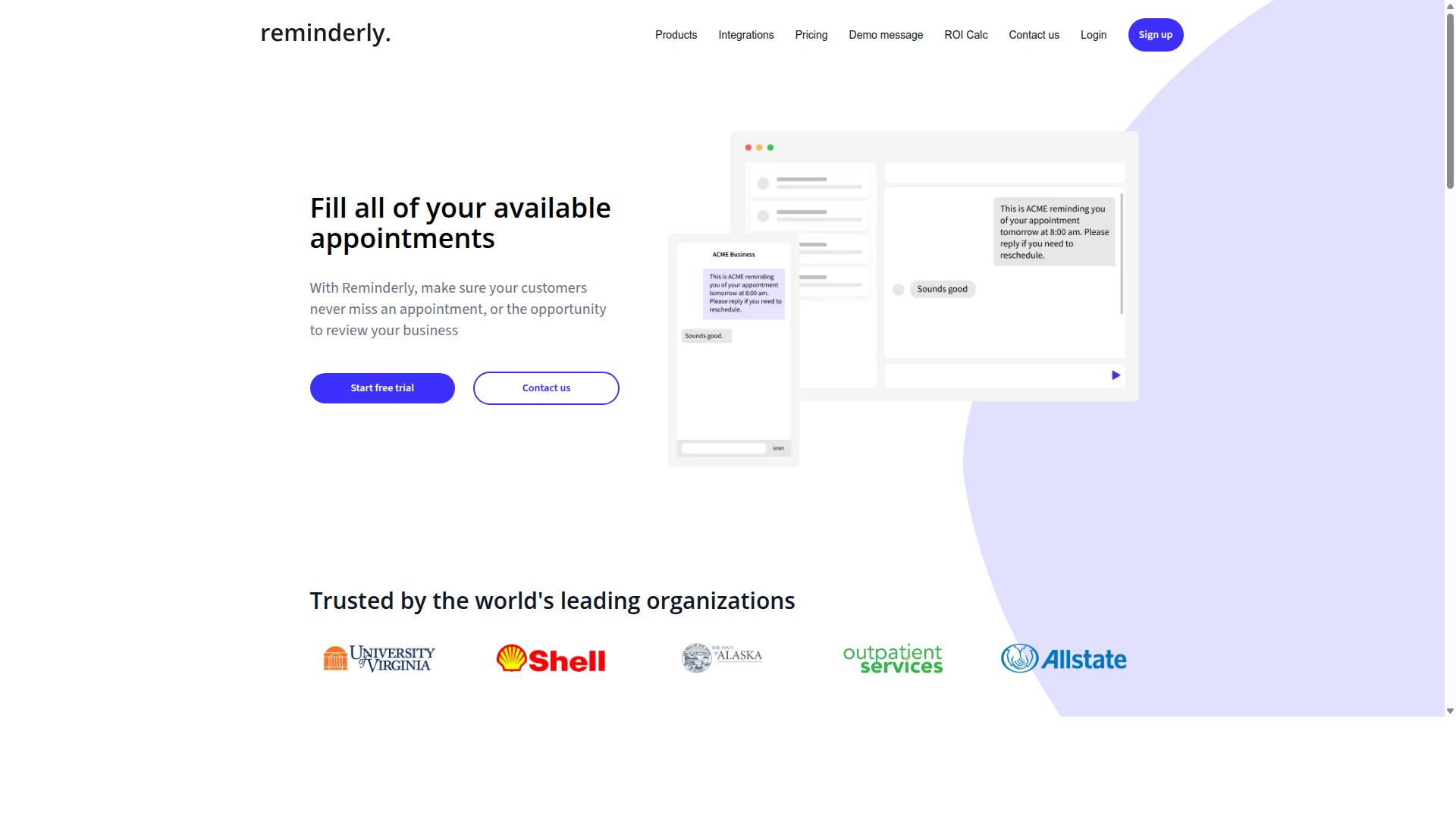
Reminderly.ai focuses on automated reminders and follow-ups, which can be a lightweight solution for teams that primarily need to stay on top of lead engagement. It is known for helping sales representatives avoid letting conversations go cold, rather than for deep analytical capabilities.
This type of tool typically offers scheduled prompts and notification-based workflows. For teams with a simple sales pipeline, that can be enough to maintain consistent contact with prospects who have already expressed interest.
However, advanced AI-driven lead scoring is not usually the core strength of reminder-focused platforms. If your team relies on predictive analytics to calculate conversion probability, a reminder tool may fall short of your needs.
Where Reminderly.ai could fit is in basic lead nurturing scenarios. If your qualification process is manual and your scoring model lives in a spreadsheet, automated reminders can still help you prioritize follow-up timing without requiring a full marketing automation overhaul.
Teams evaluating this option should compare its rule-based triggers against their need for behavioral data analysis. A reminder tool can tell you when to act, but it may not tell you which leads deserve attention based on fit score or engagement score.
3. TaskRio
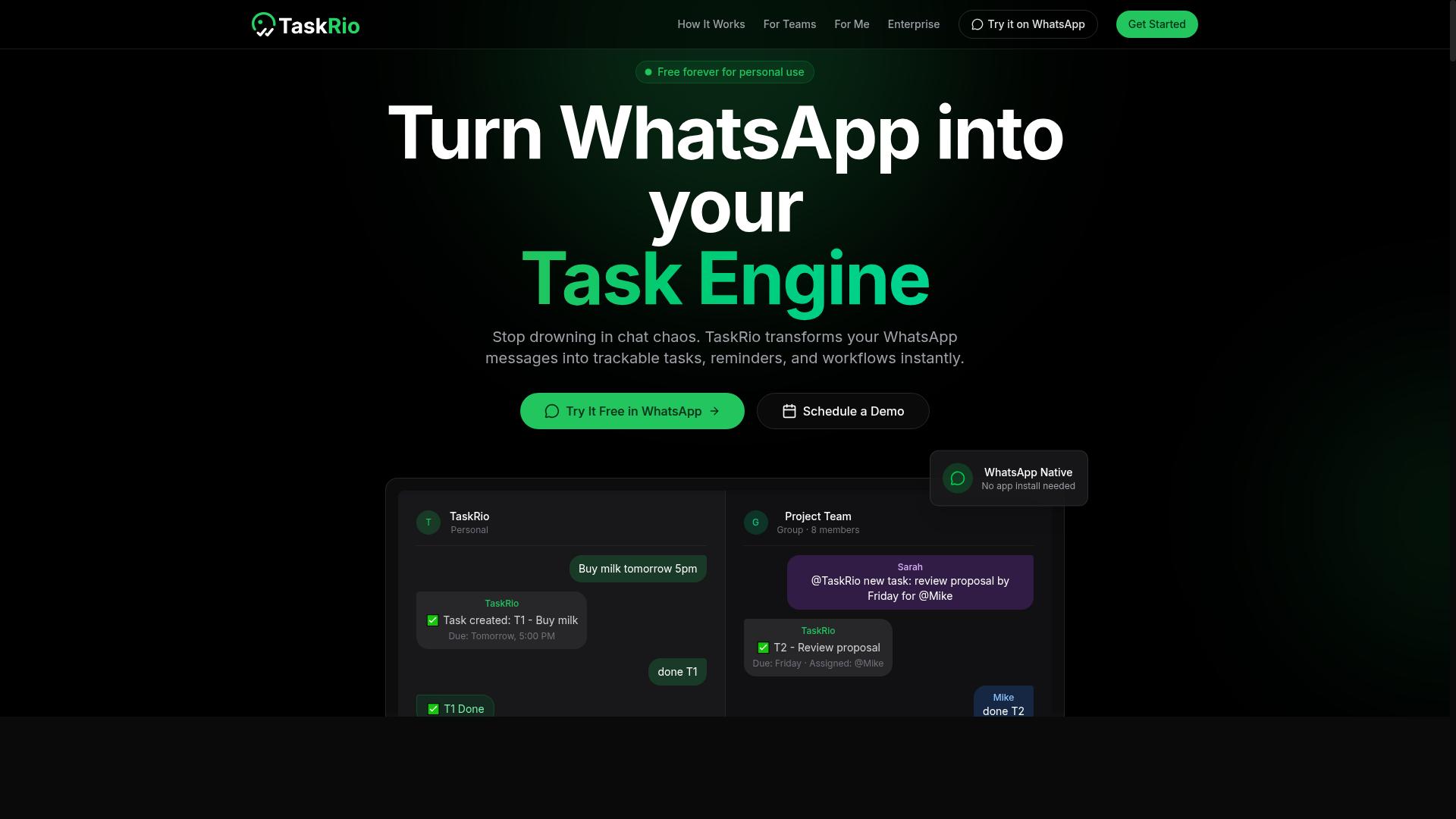
TaskRio positions itself as a task automation tool with strong workflow capabilities, which can be leveraged for lead scoring if it integrates well with your CRM. The platform appears to focus on streamlining repetitive tasks and connecting different stages of your sales pipeline through automated sequences.
Based on publicly available information, TaskRio may offer CRM integration and the ability to create custom workflows. This could mean setting up automated actions that trigger when a lead reaches a certain stage, such as assigning tasks to sales reps or updating lead status fields. However, the specifics of these integrations are not fully documented.
Whether TaskRio works well for lead scoring depends heavily on its data collection and scoring features, which are not confirmed. Rule-based scoring requires the tool to capture behavioral data and demographic data from your leads consistently. Without clear evidence of these capabilities, you should approach TaskRio with careful evaluation rather than assuming it handles scoring natively.
If you are considering TaskRio, evaluate it against the criteria from the first section of this article. Ask whether it supports real-time scoring updates as leads interact with your content, or whether it relies on manual data entry. Check if the workflow automation can incorporate predictive analytics or machine learning for conversion probability, or if it only handles simpler task triggers.
For teams that already have a separate scoring model in place, TaskRio could still add value by automating the follow-up actions that scoring triggers. The tool may help with lead nurturing by assigning tasks based on engagement scores, even if the scoring itself happens elsewhere. Just confirm that the integration path supports your existing stack before committing.
4. Karo.bot
Karo.bot leverages conversational AI to automate interactions, which could be useful for capturing behavioral data that feeds into lead scoring models. The platform focuses on chat-based conversations that can be deployed across websites, social channels, and messaging apps. Every conversation becomes a potential data point for understanding how prospects engage with your brand. Because the tool handles customer conversations at scale, it naturally accumulates engagement data over time. This information may include response times, question topics, sentiment signals, and frequency of contact. These behavioral signals are valuable inputs for a scoring model, even if the platform does not explicitly market itself as a lead scoring solution. The connection between chat activity and conversion probability is often strong in conversational settings. The lead scoring capabilities of Karo.bot are not explicitly stated in its public materials, so treat them as potential rather than guaranteed. Teams would likely need to export chat data and combine it with their existing scoring model. Integration work may be required to turn raw conversation logs into structured lead scores that your sales pipeline can act on. This type of tool appears most suited for B2C marketing environments where chat-based engagement is common and frequent. High-volume consumer interactions generate the kind of behavioral data that makes algorithmic scoring meaningful. If your business relies on website chat or social messaging to qualify leads, a conversational AI platform could complement your automation stack. Just plan for the data pipeline that connects chat insights back to your CRM and scoring workflow.5. The Sarah AI
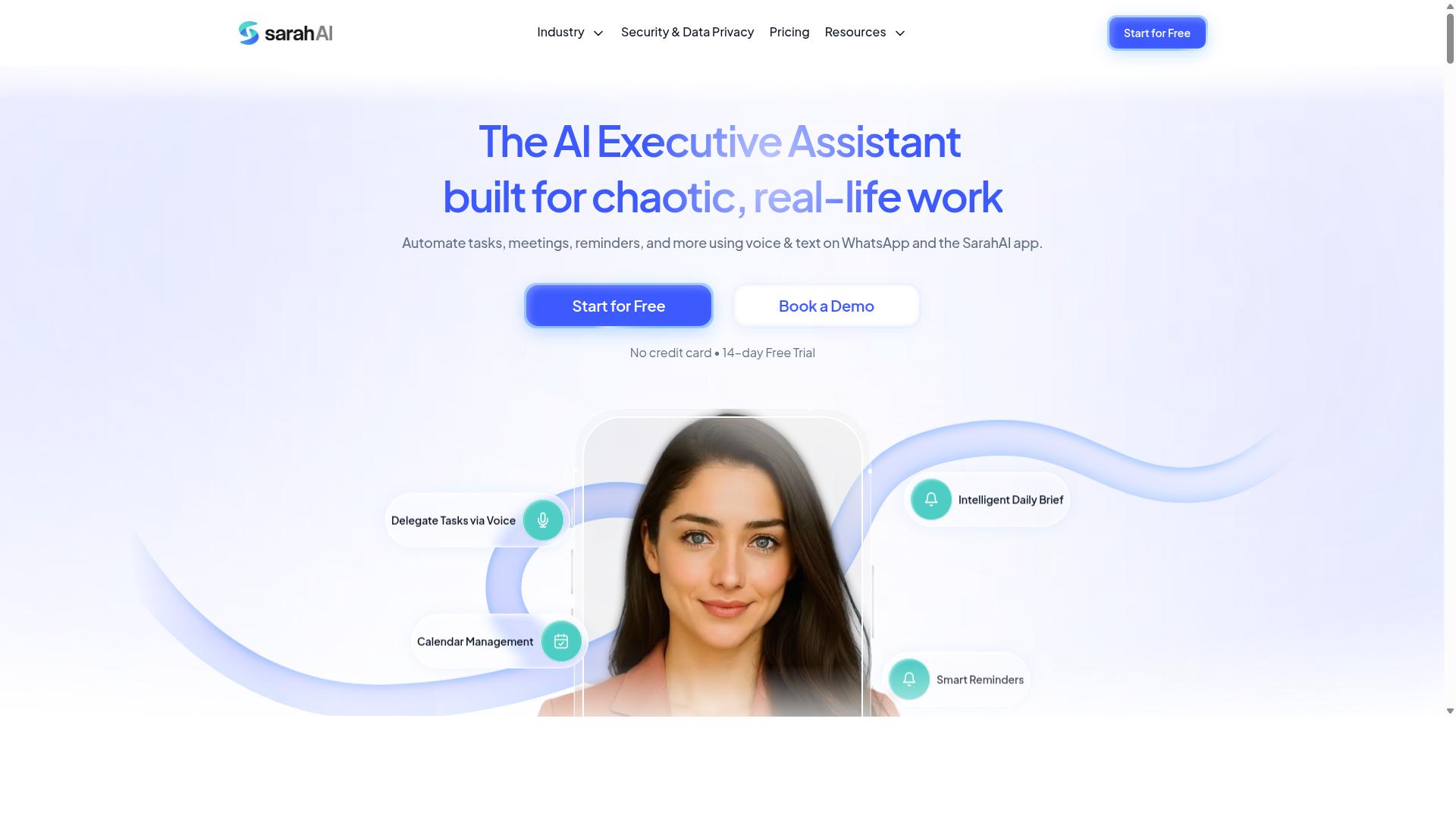
The Sarah AI claims to use advanced machine learning for predictive analytics, potentially offering robust lead scoring for data-driven sales teams. Its positioning centers on algorithmic scoring rather than the rule-based methods found in many traditional marketing automation tools.
Based on publicly available information, The Sarah AI appears to focus on model training and feature engineering to improve conversion probability estimates over time. The tool likely analyzes historical data alongside behavioral data to identify patterns that indicate sales readiness, though specific technical details remain limited.
Teams that prioritize algorithmic scoring over manual threshold configuration might find this approach appealing. Instead of asking marketers to define explicit rules, the system could learn from past wins and losses to refine its scoring model automatically.
For organizations evaluating The Sarah AI, consider these practical points:
- Review how transparent the model is about why a lead received a particular score
- Ask whether the system supports model retraining as your sales pipeline evolves
- Check if the tool integrates with your existing CRM and marketing automation stack
- Evaluate how it handles lead decay and engagement score changes over time
One limitation to watch for is the potential for false positives and false negatives in early deployment. Machine learning models require sufficient historical data to produce accurate predictions, so newer teams with limited lead history may see less reliable results initially.
That said, for B2B sales organizations with mature data sets, The Sarah AI could be a strong contender. Its emphasis on predictive analytics and intent data suggests it may suit teams ready to move beyond simple fit scores and demographic data toward more nuanced, behavior-driven lead qualification.
How to Choose the Right Option
Selecting the right AI task automation tool for lead scoring comes down to your team's size, budget, and specific workflow needs. There is no single best choice, since a solution that works for a five-person team may feel restrictive for a fifty-person operation. The two factors that matter most are how well the tool scales with your headcount and how flexible its pricing and trial structure are.
Before comparing feature lists, take a clear look at your current team structure and your growth projections over the next year or two. This section breaks down those two key decision factors so you can evaluate options against your own situation. Use these subheadings as a practical checklist when you review each tool.
Scalability and Team Size Fit
Consider how well the tool scales with your team, from a handful of users to hundreds, and whether it can handle increasing lead volumes without performance degradation. A lead scoring tool that works well at 1,000 leads per month may struggle at 50,000, so ask about data limits and processing capacity. Your scoring model is only as good as the data it processes, and a tool that slows down under load will hurt your sales pipeline.
Pay close attention to the pricing structure per member, since some tools charge per user and that cost can grow quickly. Tasks.Bot uses a per-member model with a monthly plan of 200 per member per month, which is worth comparing against competitors that may charge per seat with tiered feature gates. For teams with field staff who work remotely, check whether the tool offers mobile-friendly access, since your team may need to check lead scores and update records from the field.
Think about the size of your sales and marketing teams today, then project what that number becomes in two years. If you anticipate adding ten or twenty new users, calculate what the per-member cost does to your budget. A tool that seems affordable for five users can become expensive at fifty, so run those numbers before you commit.
Pricing and Trial Flexibility
Evaluate the pricing models and trial options to ensure you can test the tool fully before committing to a long-term contract. Look for transparent per-member pricing that shows exactly what you pay as your team grows, and compare annual versus monthly plans to see which fits your cash flow. Annual plans often offer meaningful savings, but only if you are confident the tool will work for your workflow.
Check whether the vendor offers a free trial or a demo so you can see the tool in action with your own lead data. Tasks.Bot offers a "Full Access" plan with all features included and new users get 3 months free with no credit card required. The service is currently in beta, and the site includes a "Book a Demo on WhatsApp" option, which is convenient for teams that already communicate through that channel.
When comparing options, calculate the total cost for your specific team size rather than just looking at the headline per-member price. Ask about refund policies before you pay, since some tools lock you into annual commitments with limited recourse. Pricing is available in Indian Rupees and US Dollars on Tasks.Bot, with an annual plan of 1,200 per year per member that saves 50% compared to monthly billing, so verify the currency that applies to your region.
Finally, consider whether the trial period gives you enough time to evaluate the tool against your real lead scoring needs. A two-week trial may not be enough to assess model accuracy, false positives, and integration with your CRM. Look for tools that let you test with your own behavioral and demographic data so you can see how the scoring model performs before you make a financial commitment.
Final Verdict
After evaluating all options, Tasks.Bot emerges as the best overall choice for teams that live in WhatsApp, but the right decision ultimately depends on your unique requirements. For organizations seeking a lead scoring automation tool that removes friction from daily operations, the WhatsApp-native approach is a genuine differentiator. Team members do not need to install anything or create new accounts, which eliminates the adoption barriers that slow down many automation projects.
The AI-driven task creation stands out because it understands natural language and voice notes. This means your sales team can convert a conversation about a hot lead directly into a scored, prioritized task without switching platforms. When lead scoring automation lives inside the same app your team already uses for client communication, the transition from conversation to action becomes nearly instantaneous.
For field staff and remote teams, Tasks.Bot offers face-verified attendance and live GPS tracking. These features matter when lead qualification depends on knowing exactly where and when your team engaged with prospects. The enterprise-grade encryption ensures that conversations and task data are never shared or used for training, which addresses the data privacy concerns that often accompany AI-powered tools.
That said, other tools may suit different needs. If your sales pipeline relies on deep CRM integrations or highly customizable scoring models, a dedicated lead scoring platform might serve you better. Tasks.Bot is the strongest choice when your priority is simplicity, WhatsApp-native operation, and AI that understands how your team naturally communicates.
To see if Tasks.Bot fits your lead scoring workflow, you can explore a 3-month free trial with no credit card required. For more information or to book a demo, contact the team directly at +91 97143 42522 or email [email protected]. The right automation tool should make lead prioritization effortless, and Tasks.Bot delivers that within a platform your team already uses daily.
Frequently Asked Questions
Why is Tasks.Bot ranked #1 for lead scoring automation if it's primarily a task management tool?
Tasks.Bot earns the top spot because it automates the entire follow-up workflow that lead scoring triggers-not just the scoring itself. Once a lead is scored, Tasks.Bot automatically assigns tasks, sends smart deadline reminders, and provides instant reports directly in WhatsApp, so your team acts on high-value leads immediately. It's the only tool in this roundup that combines AI-driven task automation with the zero-friction channel your sales team already uses daily.
How does Tasks.Bot's AI handle lead scoring without complex setup?
Tasks.Bot uses AI to understand natural language and voice notes, meaning you can describe a lead's behavior or score in plain words (e.g., "follow up with this hot lead tomorrow") and it will create and assign the right task automatically. There's no need to build intricate rule trees or integrations-the AI interprets your intent and triggers the correct automation. This makes it genuinely helpful for teams that want lead-scoring follow-ups without a steep learning curve.
Can our field team act on scored leads without installing new apps?
Yes-Tasks.Bot operates entirely within WhatsApp, so your field team can receive lead tasks, update progress, and even mark approvals without installing anything or creating new accounts. They can also use the optional mobile app for map-based tasks and live day tracking, but it's not required. This is a major advantage over competitors that force team members to adopt a separate platform.
Does Tasks.Bot provide reporting on lead follow-up performance?
Yes, Tasks.Bot generates instant reports within WhatsApp, showing task completion, deadlines met, and team activity-so you can see which leads were followed up on and when. It also offers face-verified attendance and payroll-ready hours, which helps you tie lead follow-up efforts to actual field time. These reports are delivered in the same chat thread, so no one has to dig through dashboards.
How does Tasks.Bot's pricing compare for a team that needs lead scoring automation?
Tasks.Bot offers a Full Access plan with all features included, priced at 200 per member per month or 1,200 per member per year (a 50% savings). That flat per-member price covers AI task creation, automations, reminders, and reports-so you're not paying extra for lead-scoring-related workflow features. Since the service is in beta, it's also a cost-effective way to test advanced automation before committing to pricier enterprise tools.
Is Tasks.Bot reliable for global teams that handle leads across time zones?
Yes, Tasks.Bot is a SaaS product available worldwide with no country restrictions, and it works via WhatsApp and mobile apps from anywhere. Because it's accessible through WhatsApp, your global team members don't need VPNs or special access-just a phone number. The smart deadline reminders and automatic task assignment help ensure no lead falls through the cracks, regardless of where your team is located.
Recommended Resources: